FRP Structures
Engineered and fabricated for durability, corrosion resistance, and reliable performance in demanding marine environments.
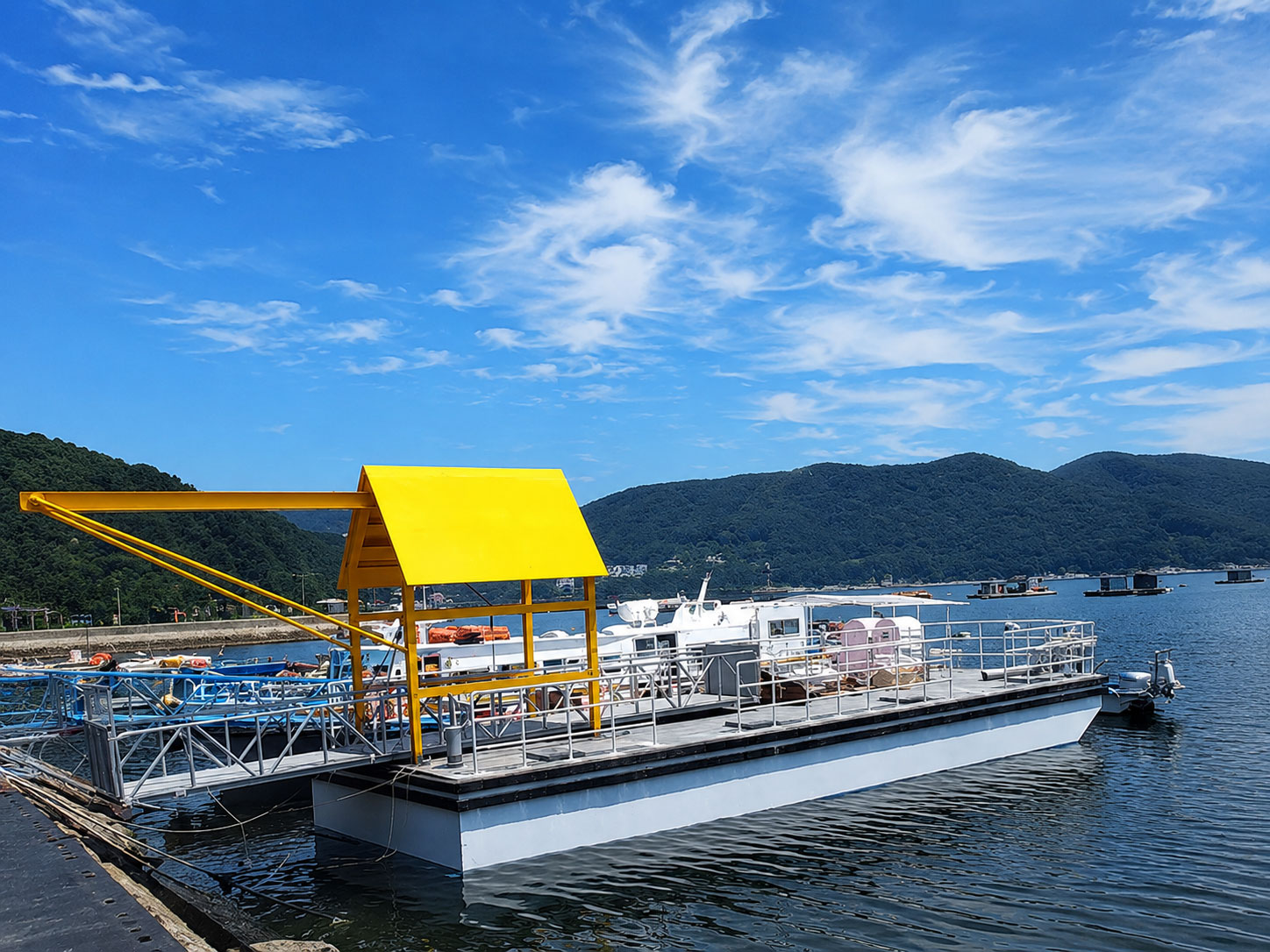
- FRP Structures
- FRP pontoon structures are lightweight and highly resistant to corrosion, helping reduce transportation, installation, and maintenance requirements. Unlike steel structures, FRP does not require corrosion-protection painting and maintains reliable performance in marine environments. The interior of the pontoon is divided into multiple watertight compartments by internal bulkheads. This compartmentalized structure provides reserve buoyancy, limits the spread of flooding, and helps the pontoon remain afloat even if part of the structure is damaged. It also facilitates localized inspection, maintenance, and repair. FRP’s flexibility and impact resistance help absorb loads caused by waves, wind, and vessel contact while limiting permanent deformation. The pontoon can be manufactured in various colors and configurations, and its upper deck can accommodate railings, utility systems, shelters, and other ancillary structures. The integrated pontoon structure provides excellent structural stability and can be custom-designed and fabricated to suit local site conditions. Marine Develop Marvel has experience in designing and fabricating pontoons for naval vessel berthing facilities.
-
Structural Features Of Frp Pontoons
The First Korean Company to Secure an Order for and Fabricate Pontoons for Naval Vessel Berthing
- Internal bulkheads divide the pontoon into multiple watertight compartments, providing reserve buoyancy and helping maintain flotation even if one compartment is damaged.
- The material properties of FRP provide excellent corrosion resistance and help limit permanent deformation.
- The structure is designed to withstand loads and impacts caused by waves and wind.
- Its flexibility and impact resistance help absorb external loads and reduce structural damage.
- FRP pontoons can be manufactured in a variety of colors, shapes, and configurations to meet project-specific requirements.
- The integrated pontoon structure distributes external loads and helps limit localized deformation caused by waves and wind.
-
Strengths of FRP Structure
- Lightweight construction facilitates transportation and installation while helping reduce maintenance requirements.
- Damaged sections can be inspected, repaired, and maintained on site with relative ease.
- FRP does not require corrosion-protection painting, helping reduce ongoing maintenance.
- The upper deck can accommodate a wide range of ancillary structures and equipment.
- FRP structures provide reliable performance and can be custom-designed to suit local site and installation conditions.
Process Flow
-
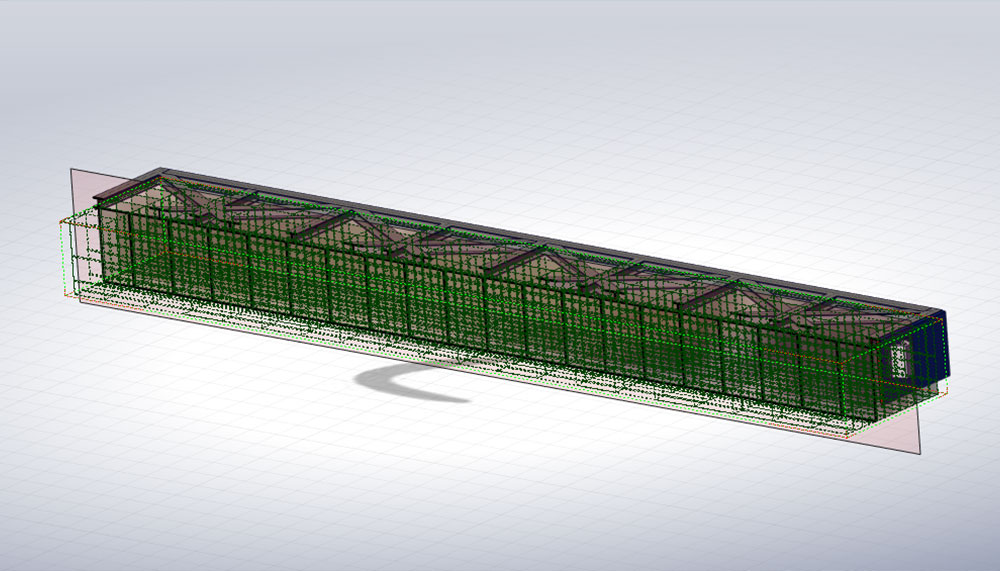
01
Quotation, Technical Consultation & Design Our designers, cost estimators, and development specialists review the project requirements, provide quotation and technical consultation, and develop a project-specific design.
-

02
BOM Preparation & Material Procurement A bill of materials (BOM) is prepared, and the required raw materials, components, and auxiliary materials are ordered and secured in accordance with the contract.
-
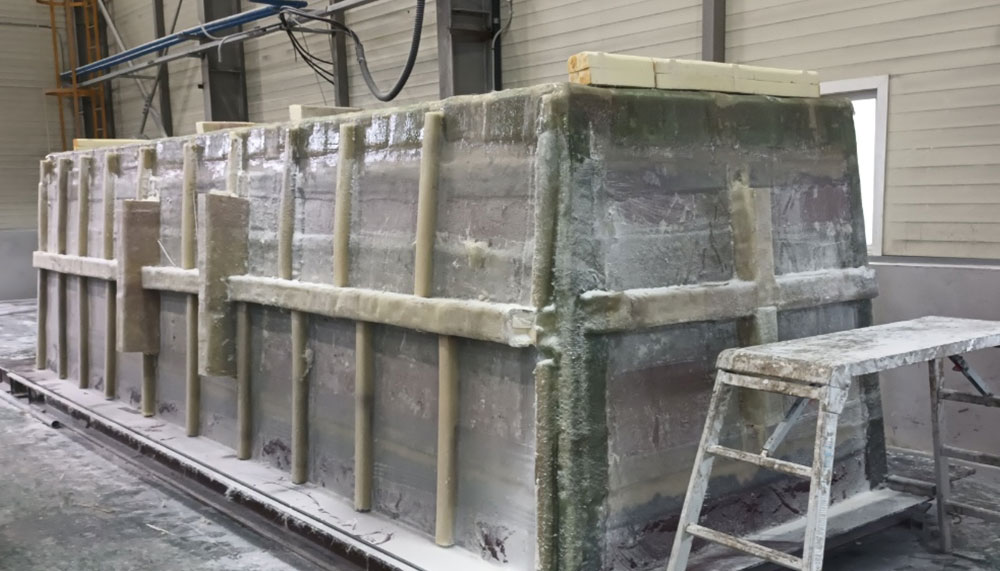
03
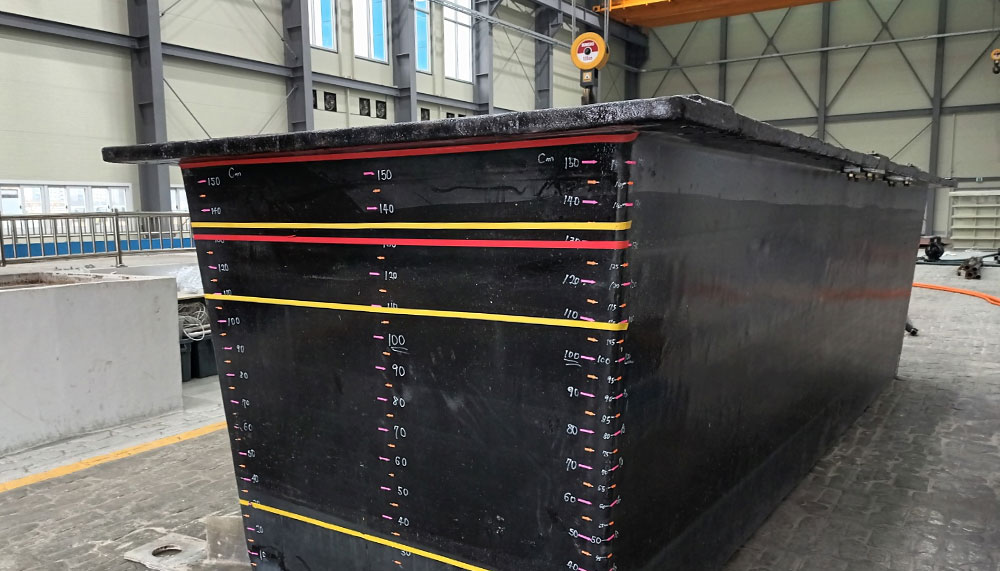
Mold Fabrication A mold is fabricated to form the exterior shape of the pontoon and establish its basic dimensions.
-
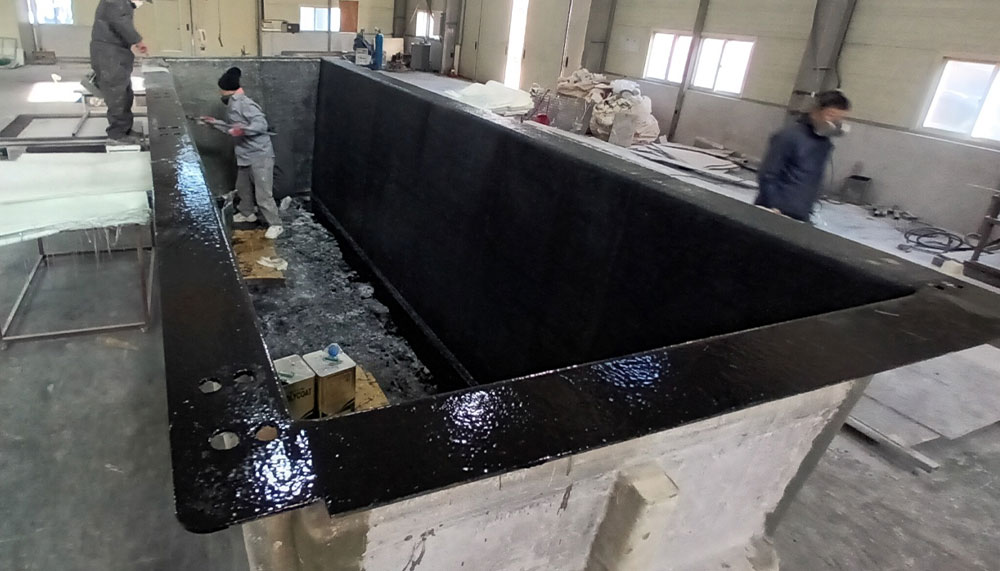
04
Mold Preparation & Gelcoat Application The interior surface of the mold is treated with release wax, after which gelcoat is applied to form and protect the exterior surface of the pontoon body.
-

05
FRP Lamination: Mat, Roving & Resin Fiberglass mat and woven roving are impregnated with resin and laminated onto the mold surface in accordance with the specified layup schedule.
-
06
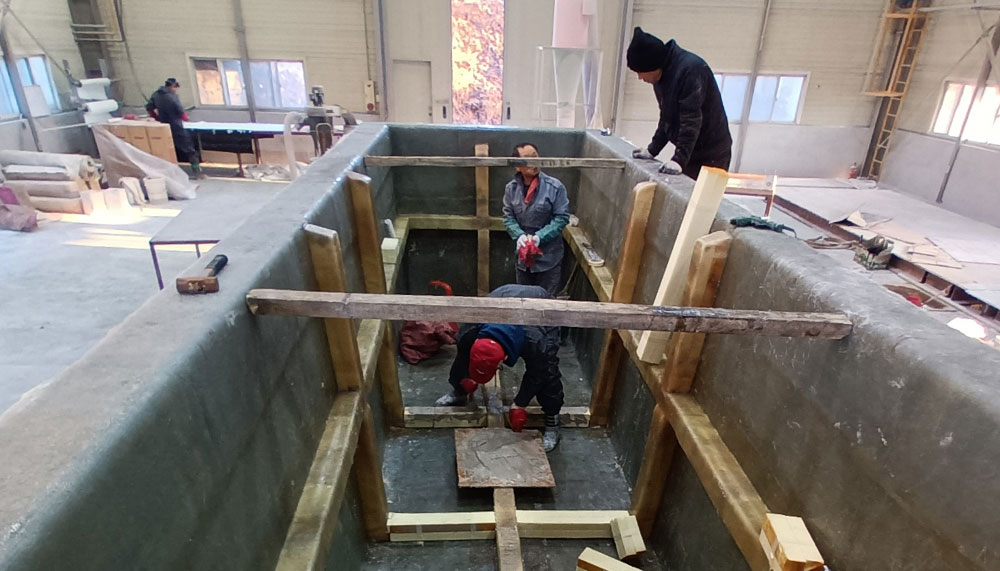
Bulkhead Installation & FRP Reinforcement Internal bulkheads and reinforcing members are positioned and bonded to the main body using FRP lamination.
-
07
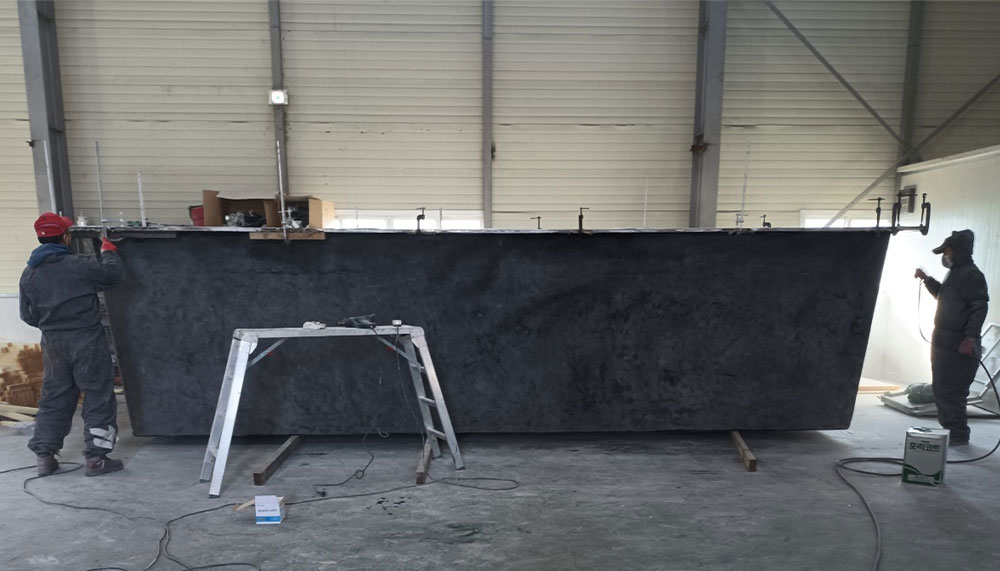
Demolding After curing, the molded product is removed from the mold, completing the primary exterior structure.
-
08
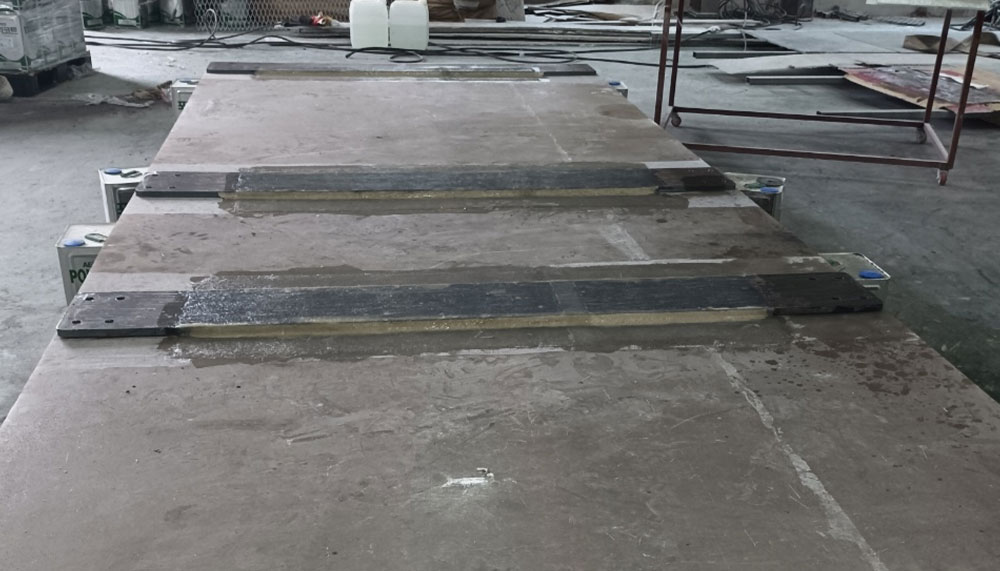
Upper Cover Fabrication The upper cover is fabricated using a method appropriate for the applicable design specifications.
-
09
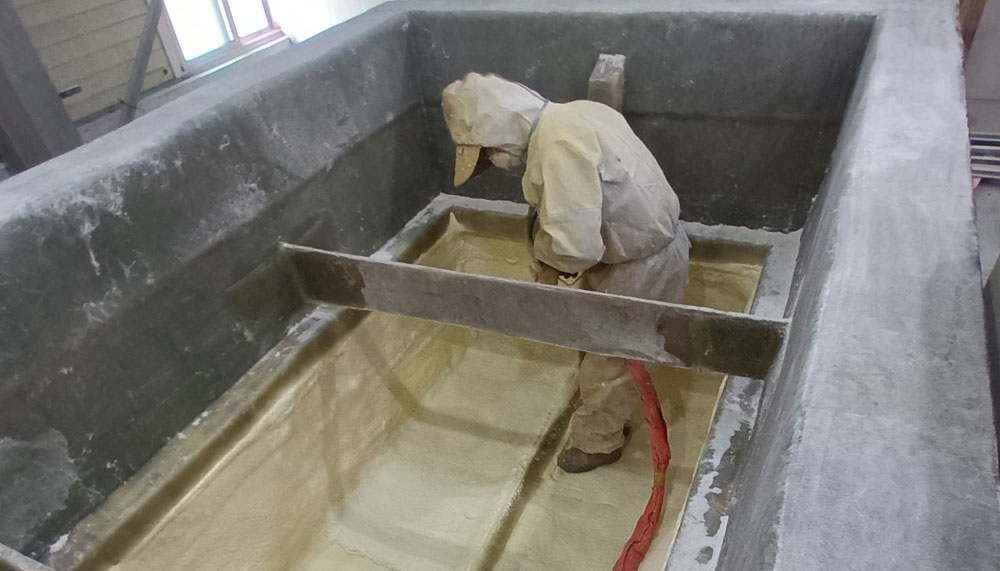
Internal Buoyancy Unit Installation Internal buoyancy units, such as EPS blocks or other specified foam units, are installed and assembled in accordance with the project specifications.
-

10
Ancillary Equipment Installation Protective fenders, cross bollards, anchor-line guides, and pontoon connection rods are installed in accordance with the design specifications.
-
11
Upper Cover Assembly & Bonding The upper cover is installed, bonded, and sealed to complete the main pontoon body.
-
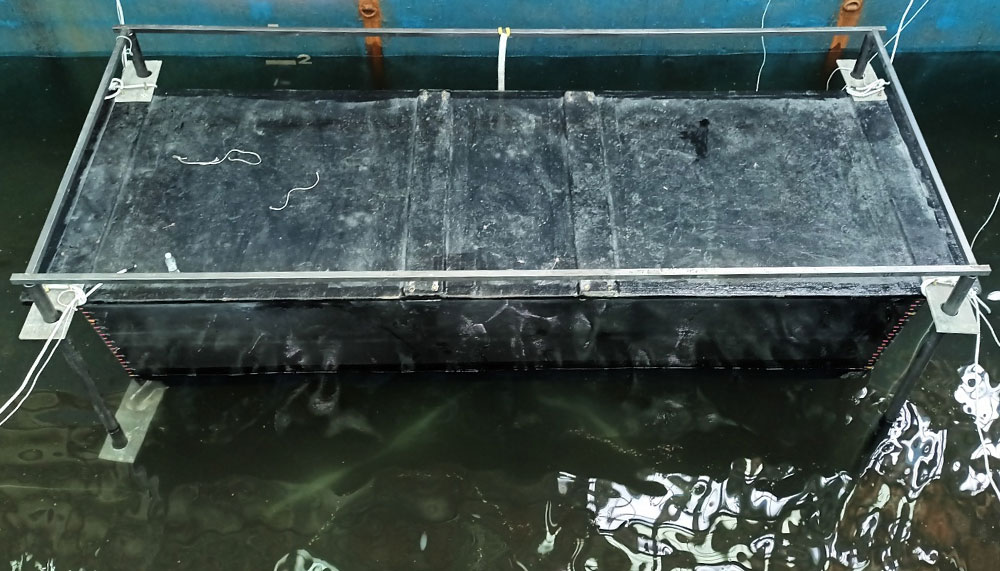
12
Draft & Freeboard Test(Optional) The pontoon’s draft and freeboard are measured under the loading conditions specified by the client.
-
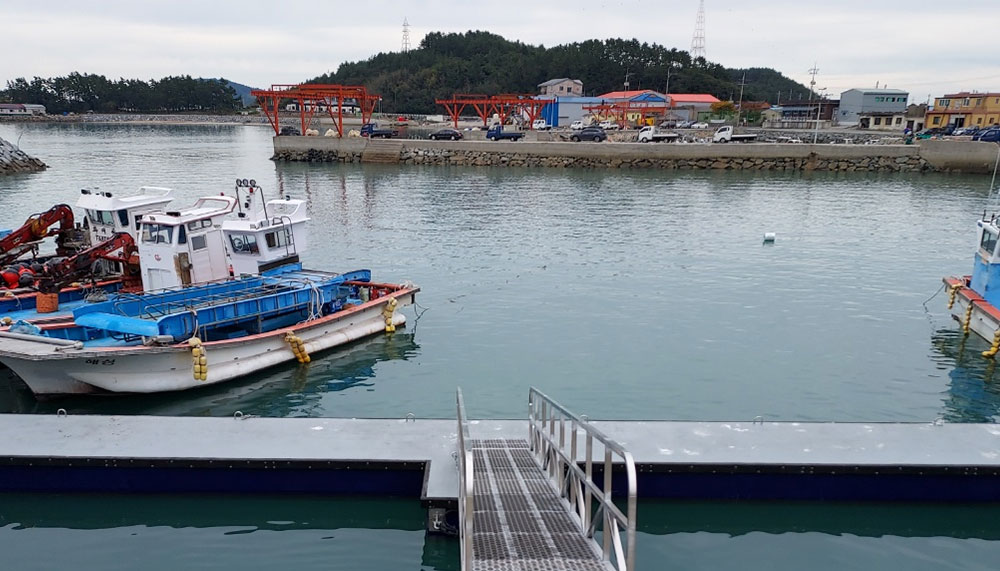
13
Transportation & Installation The completed pontoon is transported to the installation site, positioned at the designated location, and installed in accordance with the approved installation plan.
-
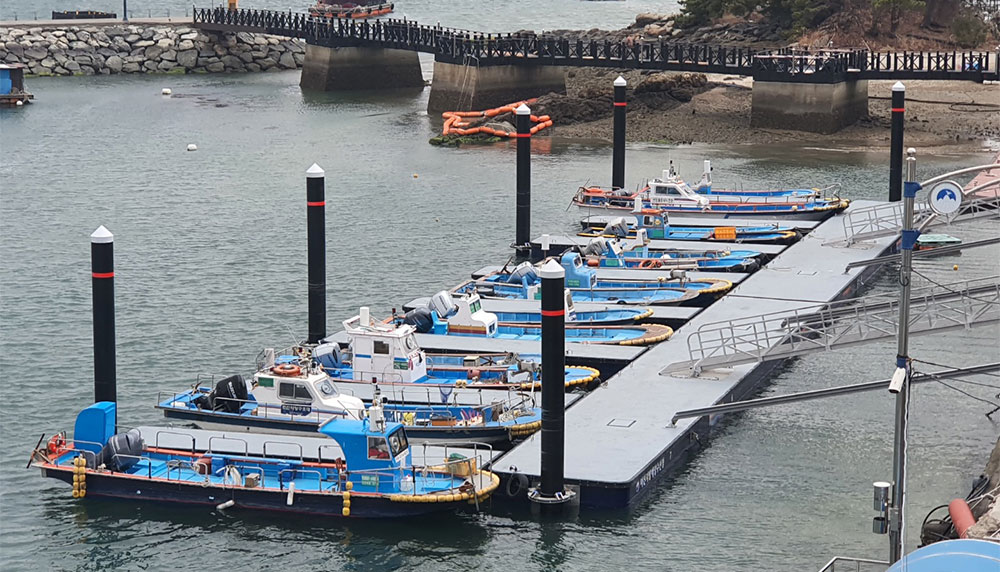
14
Final Inspection A final inspection is conducted after installation is completed.